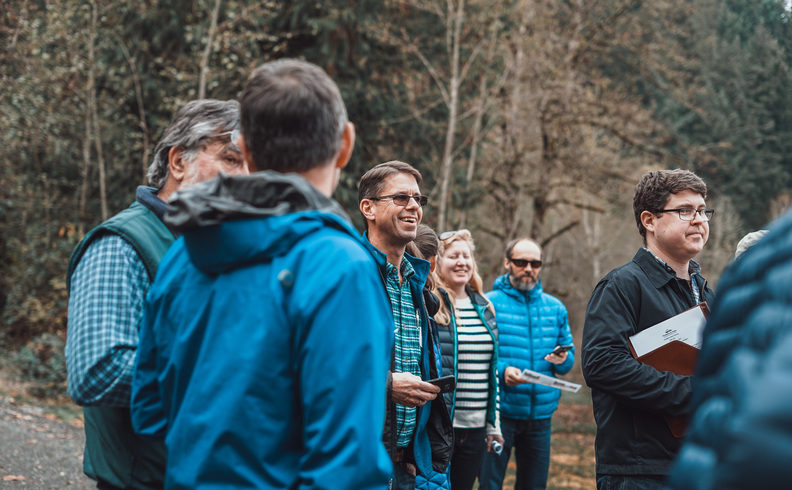
Integrated floodplain management takes patience, persistence and challenges our current paradigm to floodplain management. Floodplain Leaders- local practitioners that are engaged in doing integrated floodplain management, came together in the Puyallup on November 13th to learn from each other and to garner support from each other and from regional partners to continue to advance and deepen this work across WA state.

One of the highlights of the day was hearing the presentation from Isabel Ragland, Pierce Conservation District, on the Shared Monitoring Plan for the Floodplains for the Future (Puyallup, White and Carbon Rivers). Usually when folks just mention the word “monitoring” eyes roll back into their head and a furrowed brow appears. However, the approach that Isabel presented was simple to understand and captured the essence of how to measure and achieve floodplain health across the varied interests- (i.e. flood, farm and fish).
What was fun and exciting is that the shared monitoring framework was built to answer large scale questions in a way to help measure progress and deepen and sustain trust by the varied interests. The power of this approach is that it tracks and quantifies things happening with floodplain development within the context of the investments being made. If you are interested in learning more about this innovative approach to measure floodplain health- check out her presentation.
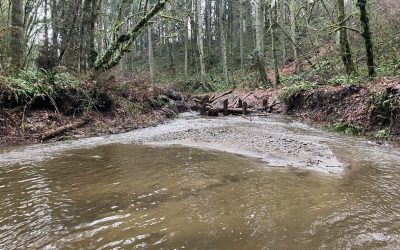
In addition to the monitoring presentation, the day was filled with direct dialogue and discussion between the FbD management team and a site visit to the South Fork Side Channel Project. Overall the day was focused on learning, sharing and reflecting on different perspectives from the day to increase our connection with each other under the shared goal of how to improve our collective efforts to implement integrated floodplain management across the state.

Thank you for all the were able to attend and that contributed to make the day a success. Here are the notes if you are interested in learning more.